
How AI changes research practices and raises new questions about trust, responsibility, and organisational standards.
Two researchers and PhD candidates from the R-AIMS project recently participated in the STS Conference in Graz, where they presented collaborative work developed by eight researchers from the project.
The contribution, titled Trustworthiness Under Pressure: Accountability Gaps in AI-Enabled Research Organisations, examines how the growing use of artificial intelligence in academic research challenges established standards of scientific reliability and responsible research practice. While AI tools increasingly support tasks such as literature analysis, writing, data processing, and research organisation, their integration also raises important questions about trust, transparency, accountability, and scientific oversight.
The contribution investigates how research organisations currently conceptualise and regulate AI-supported research through Responsible Conduct of Research (RCoR) guidelines and contrasts these frameworks with the rapidly expanding ecosystem of AI-based tools across the research process. A central question concerns whether existing institutional standards remain sufficient in a research landscape where AI increasingly shapes not only individual tasks but broader research practices and organisational structures.
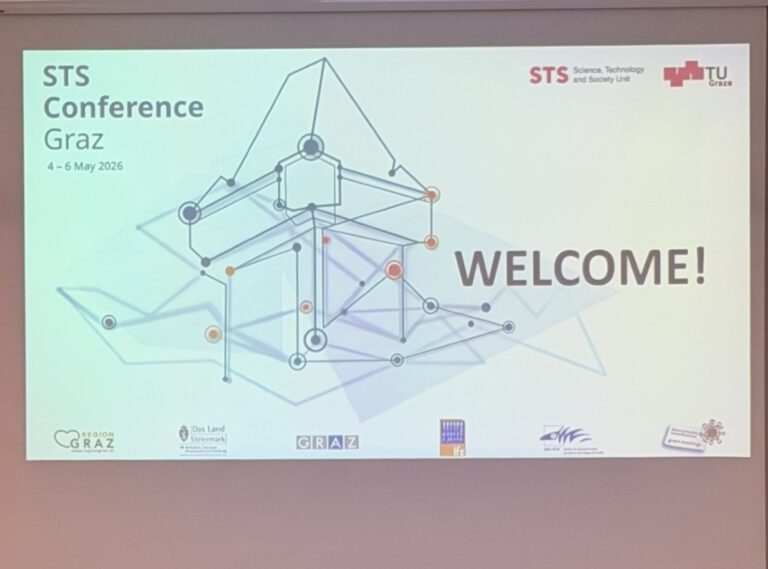
© R-AIMS, HAW Hamburg / STS Conference Graz
The conference offered an excellent opportunity to discuss these questions with an interdisciplinary audience from science and technology studies. The presentation sparked valuable discussions and generated helpful feedback that will inform the project´s ongoing research and methodological development.
Beyond the academic exchange, the conference also provided inspiring perspectives on current debates surrounding AI governance, responsibility, and the changing role of research organisations in increasingly AI-supported environments.