
An interdisciplinary contribution at PETRA 2026 explored deliberate AI disobeying as a countermeasure against the cognitive and social risks of AI reliance, sparking engaging discussions on responsible human-AI interaction.
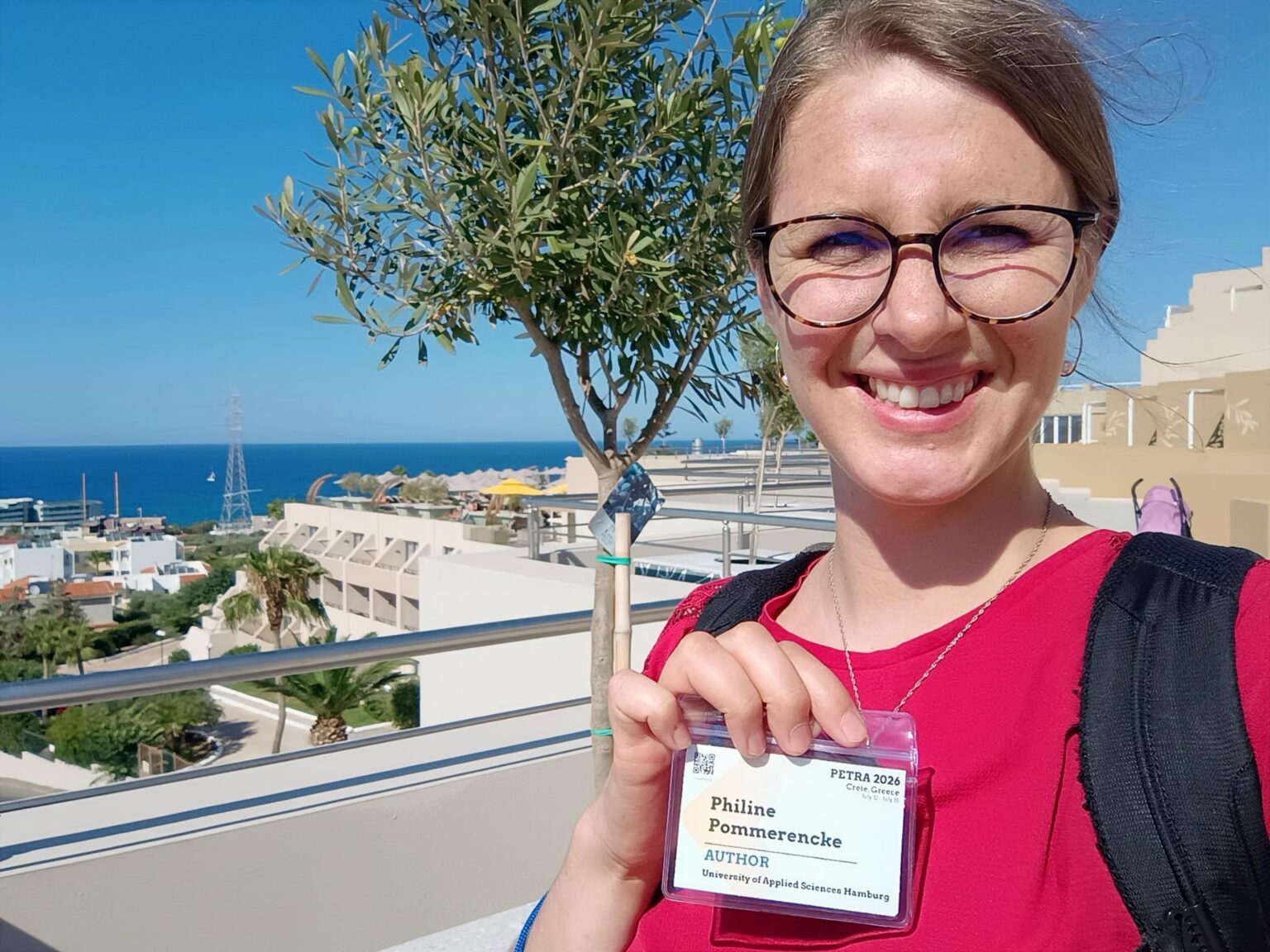
From July 12th to 15th, researchers from the University of Applied Sciences Hamburg attended the 19th International Conference on Pervasive Technologies Related to Assistive Environments (PETRA). Bringing together researchers across diverse fields, the conference focused on how intelligent systems and AI can support human users with various needs.
As part of the Workshop for Robust Applied Intelligent Assistive Systems for Society & Enterprise (RAISE), R-AIMS researcher Philine Pommerencke presented the paper “Serving by Disobeying: A Staged Model of Role-Specific Non-Compliance within Human-Centered AI”, which was joint work with Nataliya Didukh, Ihor Zhvanko and Dr. Susanne Draheim. The conceptual paper addresses a critical challenge in modern AI usage: counteracting negative cognitive and social side effects, such as metacognitive laziness or reduced human interaction.
Aligned with principles of human-centered AI, the core idea proposes designing AI agents capable of intentional disobeying. By selectively non-complying with user instructions, the system challenges users to perform key tasks independently from the AI to preserve their skills, while encouraging social interaction and human-to-human advice seeking.
© Philine Pommerencke (R-AIMS) / HAW Hamburg
Rooted in the principles of responsible AI, the proposed concept outlines escalating stages of disobedient agent behavior. This structured escalation enhances explainability, making the agent’s actions transparent, predictable, and ultimately trustworthy for the user.
The presentation generated both intrigue and constructive debate among workshop participants. The concept prompted a fruitful exchange regarding its potential, possible implementation pitfalls, and practical avenues for future empirical research.
Beyond their own session, the R-AIMS team gained valuable insights from presentations covering state-of-the-art assistive technologies—ranging from accessibility tools for individuals with special needs to systems supporting workplace task execution. The conference breaks and evening events provided excellent opportunities to network with international researchers, exchanging perspectives on ongoing work and the evolving nature of human-AI interaction.